
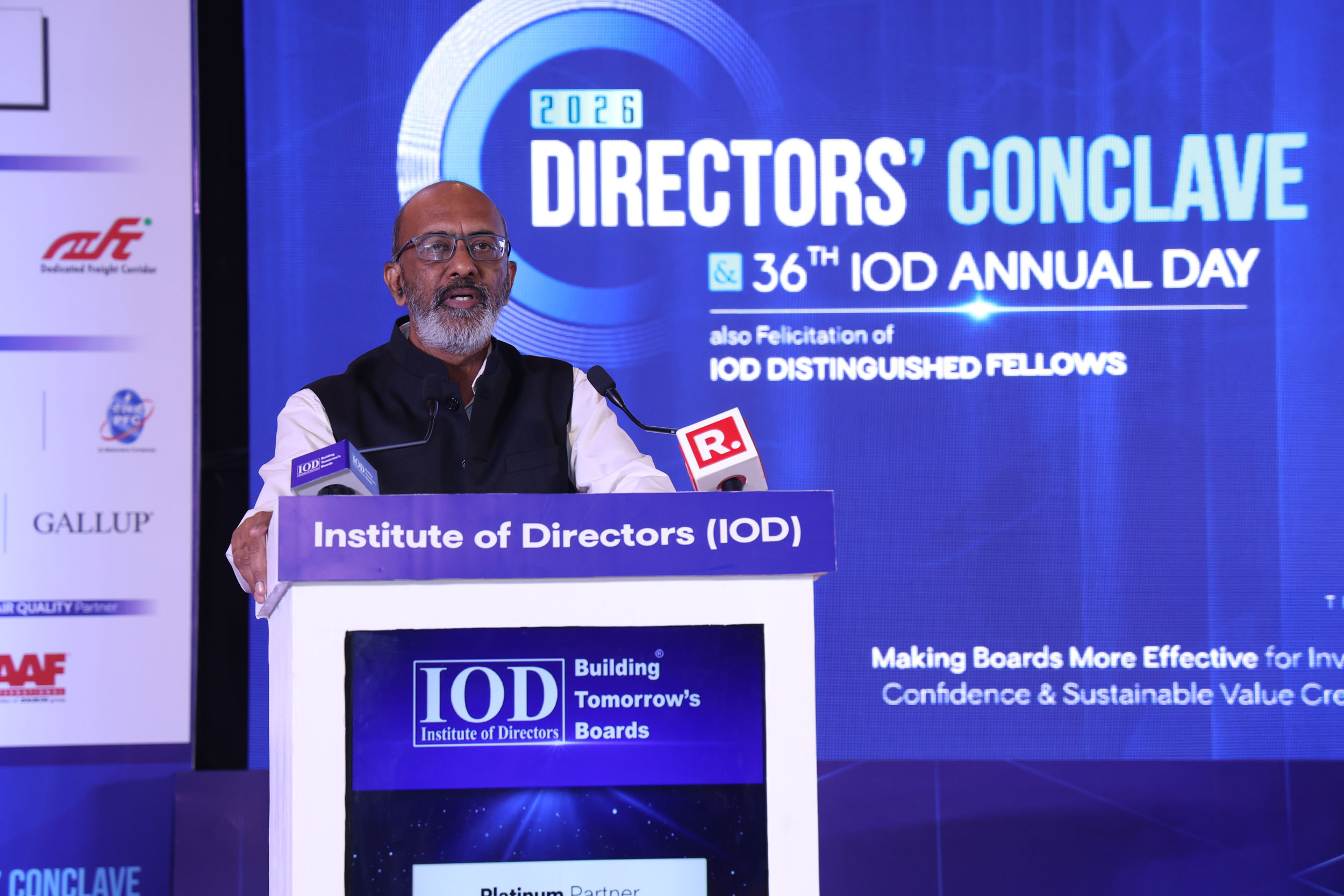
Responsibility at IOD Annual Directors’ Conclave 2026
AWL Agri Business Ltd. reinforced its commitment to embedding sustainability into business strategy and decision-making at the Institute of Directors (IOD) Annual Directors’ Conclave 2026, held in New Delhi on August 22, 2026. Recognized as one of IOD’s flagship national events, the conclave brought together corporate directors, board members, policymakers, governance experts, investors, and business leaders from India and abroad to deliberate on this year’s theme, “Making Boards Effective for Investor Confidence & Sustainable Value Creation.”
The event was graced by Shri Jyotiraditya M. Scindia, Hon’ble Union Cabinet Minister for Communications and Development of North-Eastern Region, as the Chief Guest, while Shri Tuhin Kanta Pandey, IAS, Chairman, Securities and Exchange Board of India (SEBI), attended as the Guest of Honour. The conclave also featured participation from distinguished government officials, industry leaders, CEOs, managing directors, and governance professionals who shared perspectives on strengthening corporate leadership and creating sustainable value in an evolving business landscape.
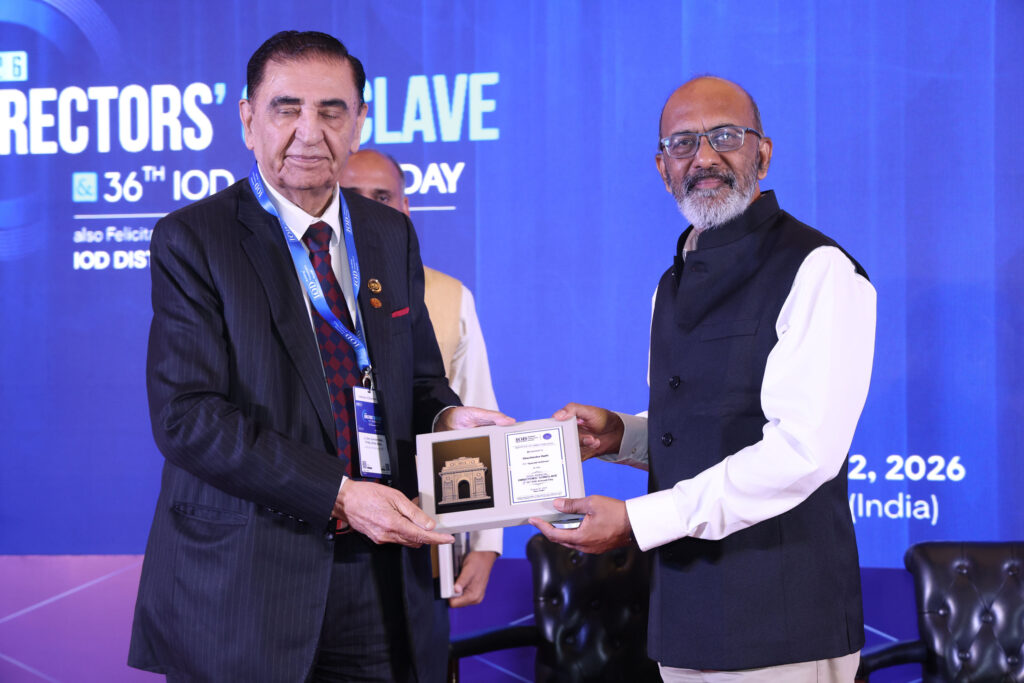
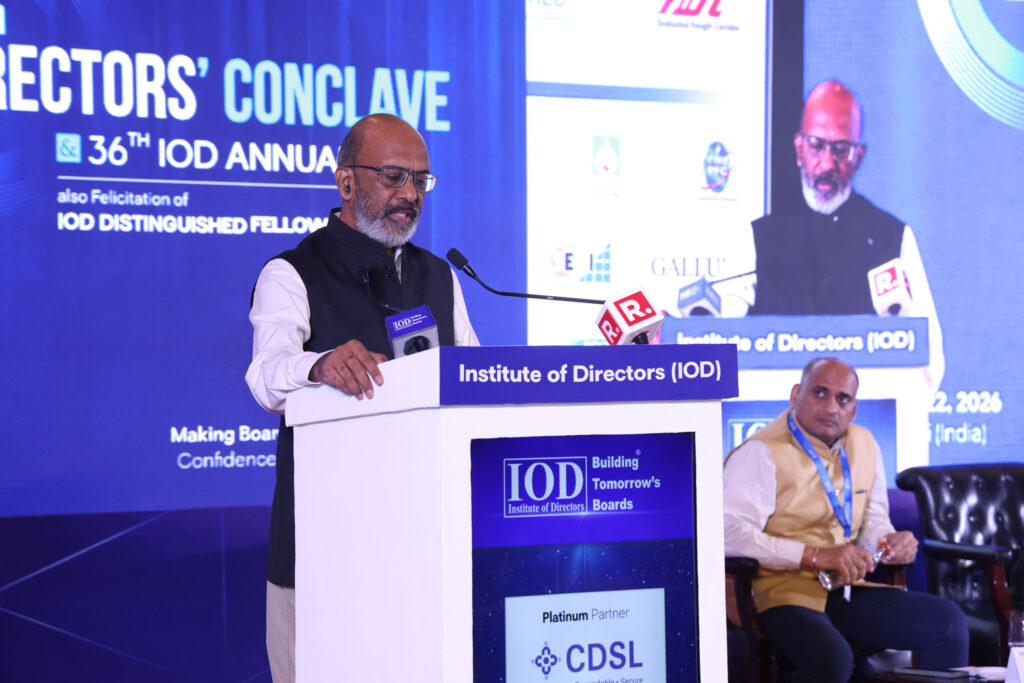
Representing AWL Agri Business during Plenary Session V, “The ESG Inflection Point: From Reporting to Responsibility,” Mr. Rajneesh Bansal, Joint President – Procurement & Supply Chain, shared the company’s perspective on integrating Environmental, Social and Governance (ESG) considerations into investments, operations, supply chains, and stakeholder engagement.
The session highlighted a fundamental shift taking place across the corporate world. While ESG was once largely viewed through the lens of sustainability reporting and compliance, it is increasingly becoming a strategic business imperative that influences operational resilience, risk management, capital allocation, sourcing decisions, and long-term value creation.
For AWL Agri Business, sustainability is not treated as a standalone initiative. Instead, it is embedded across the value chain, from sourcing and manufacturing to logistics, packaging, people, and communities. As a company operating at the intersection of agriculture, food processing, manufacturing, and consumer markets, AWL recognizes that responsible business practices are essential to building a resilient and future-ready organization.
This philosophy is reflected in the company’s investments aimed at improving resource efficiency and strengthening operational resilience. Water stewardship remains a key area of focus, given the critical role water plays in the food and agriculture sector. AWL has expanded its Zero Liquid Discharge (ZLD) infrastructure to 13 plants, with a combined treatment capacity of approximately 3,850 KL per day. Through initiatives such as water recycling, reuse, and condensate recovery, the company saves more than 7,45,819 KL of water annually. AWL has also strengthened its rainwater-harvesting infrastructure, with storage capacity of approximately 3,02,000 KL, supporting water conservation and long-term resource security.
 The company continues to advance its renewable energy journey through investments in cleaner energy sources. AWL has installed approximately 11.6 MW of solar power generation across its manufacturing facilities, with renewable energy contributing nearly 16% of its total energy consumption. Today, 71% of the company’s manufacturing plants have integrated solar or wind energy solutions, reflecting its ongoing commitment to reducing environmental impact while improving operational efficiency. Over the last five years, AWL has also reduced its water-consumption intensity from 0.61 KL per metric tonne to 0.43 KL per metric tonne, representing an improvement of approximately 29%.
The discussion also emphasized the increasing importance of building responsible and resilient supply chains. In an environment shaped by climate change, evolving agricultural patterns, resource constraints, and changing consumer expectations, transparency and traceability have become critical business priorities. AWL continues to strengthen sustainability standards across its sourcing ecosystem, with nearly 90% of its palm oil volumes traceable to the mill level, enabling greater transparency and responsible sourcing practices.
Sustainability considerations are equally influencing the company’s logistics and distribution strategies. Approximately 23% of AWL’s primary edible-oil dispatches are undertaken through rail transportation, while 10.6% of its secondary dispatches utilize green-fuel-based transportation solutions. These initiatives help reduce transportation-related emissions while supporting a more efficient and resilient supply chain network.
Packaging and circularity remain another important focus area. AWL has made substantial progress in advancing sustainable packaging solutions, with nearly 98% of its product packaging now recyclable. Fortune was among the first brands in India to introduce recyclable edible-oil pouches, reinforcing the company’s commitment to innovation and sustainability. AWL has also achieved Plastic Neutral Company status and has recycled more than one lakh metric tonnes of post-consumer plastic waste through certified recycling partners, equivalent to 100% of the plastic packaging introduced into the market.
Beyond its environmental commitments, AWL continues to create meaningful social impact through community-focused initiatives. Its flagship CSR programme, Fortune SuPoshan, addresses malnutrition and anaemia through awareness, community engagement, and behaviour-change interventions. The initiative has positively impacted more than 41 lakh lives across India, reaching over 7 lakh households, benefiting more than 4.6 lakh children aged 0-5 years, supporting over 7 lakh women of reproductive age, and engaging more than 3 lakh adolescent girls across 3,300 villages.
The company’s wider social impact initiatives extend to healthcare, education, women’s empowerment, vocational skills development, sustainable livelihoods, water conservation, community infrastructure, and rural development. AWL has also contributed to environmental restoration through plantation drives, with more than 2.26 lakh trees planted to date. These initiatives are guided by the belief that sustainability is not only about reducing environmental impact but also about creating positive and lasting value for communities.
Underlying all of these efforts is a strong governance framework that ensures accountability, oversight, and continuous improvement. AWL has established a multi-tiered sustainability governance structure that integrates ESG considerations into strategic planning and business decision-making. The company’s progress is also reflected through external benchmarks, including a ‘B’ score in CDP Climate Change, a ‘B’ score in CDP Water Security, and a DJSI score of 60.
As discussions at the IOD Annual Directors’ Conclave underscored, the future of ESG lies in integration rather than isolation. Increasingly, ESG considerations are becoming part of investment planning, procurement strategies, sourcing decisions, product development, packaging choices, logistics planning, talent management, and enterprise risk management.
For AWL Agri Business, the journey ahead is focused on building a business that is resilient, responsible, and capable of creating sustainable value for all stakeholders. The company’s approach reflects a growing recognition across industries that long-term business success and sustainability are not separate objectives, but interconnected drivers of enduring growth and value creation. Through continuous innovation, responsible decision-making, and stakeholder engagement, AWL remains committed to translating ESG ambitions into measurable impact and meaningful outcomes.